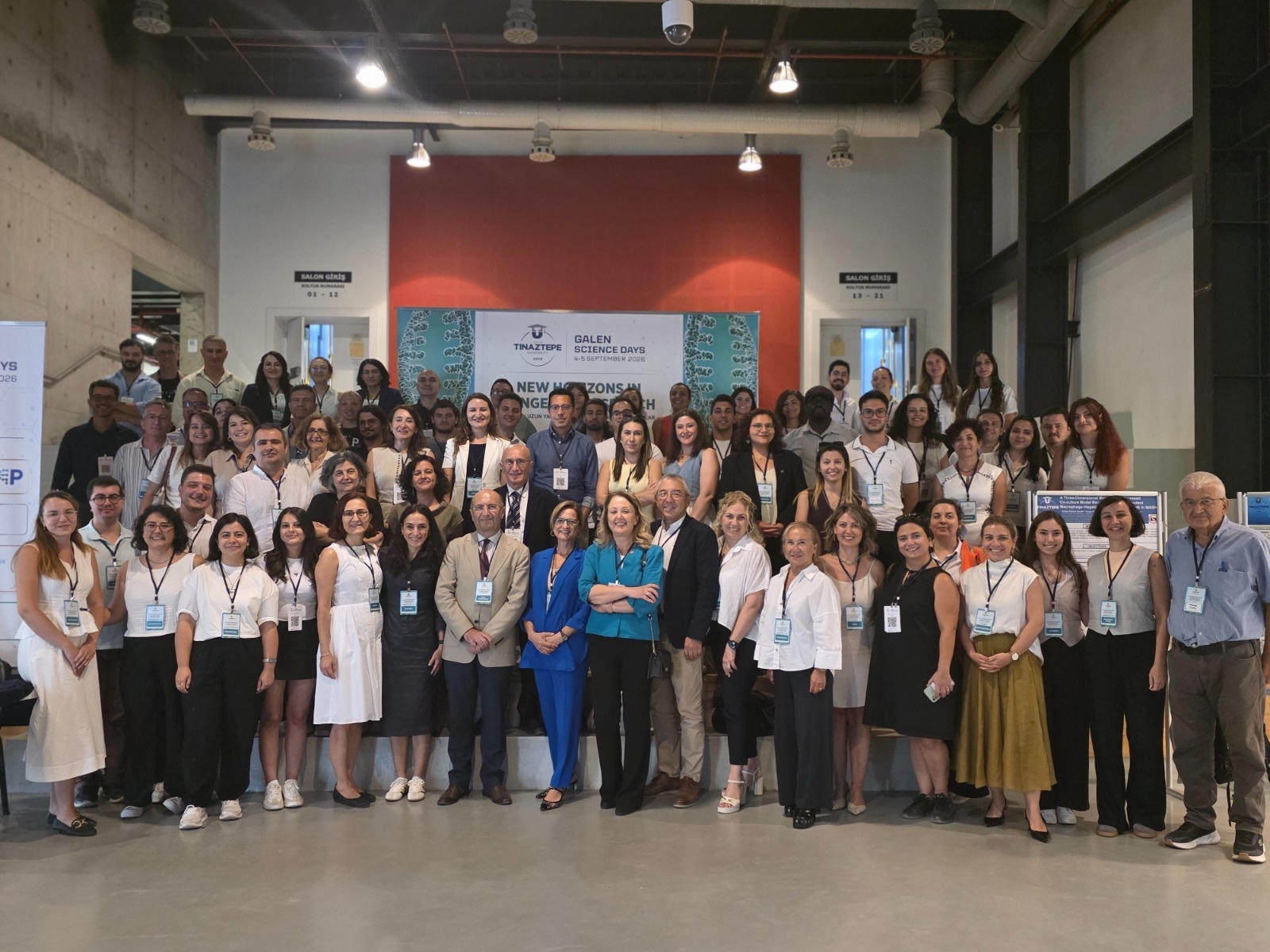
On 4–5 September 2026 Melike and Seyfullah attended Galen Science Days 2026, New Horizons in Longevity Research, in İzmir. The Galen Research Center of İzmir Tınaztepe University organises this international symposium. Mehmet Öztürk and Neşe Atabey co-chaired it, and the venue was the İzmir Mimarlık Merkezi in Alsancak.
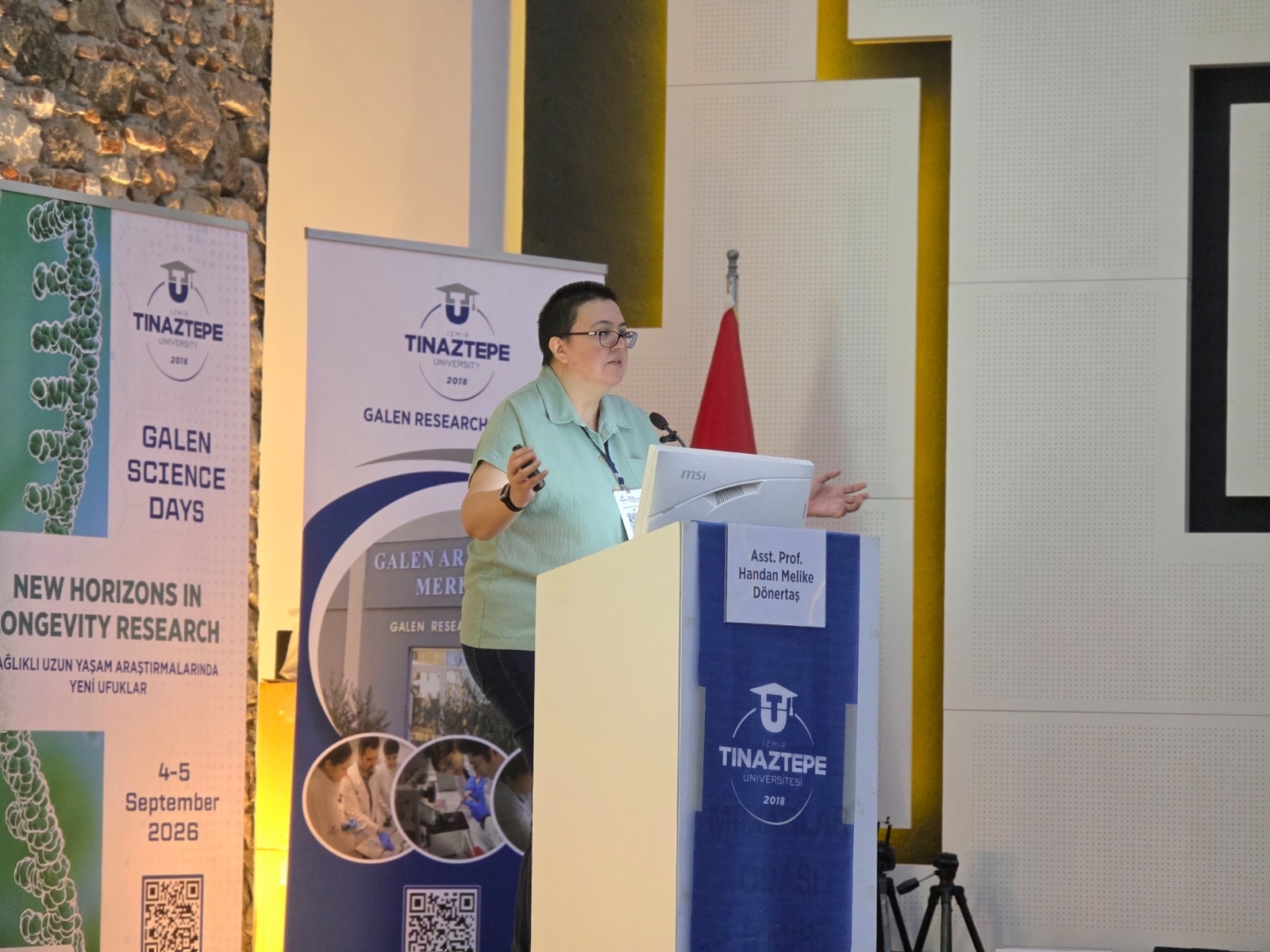
Melike spoke on the first morning in Session 1, Precision Medicine, Multi-Omics and AI in Longevity Research, with Uğur Sezerman, Özlen Konu and Cengiz Yakıcıer. Her 20-minute talk, Measuring Ageing Across Scales, asked what we can measure about ageing at three scales, and put one project of the group at each: ageing clocks in human populations, the gut barrier read from blood between a host and its microbiome, and senescence in single cells. A panel discussion closed the session, and several people came to continue the conversation in the coffee break.
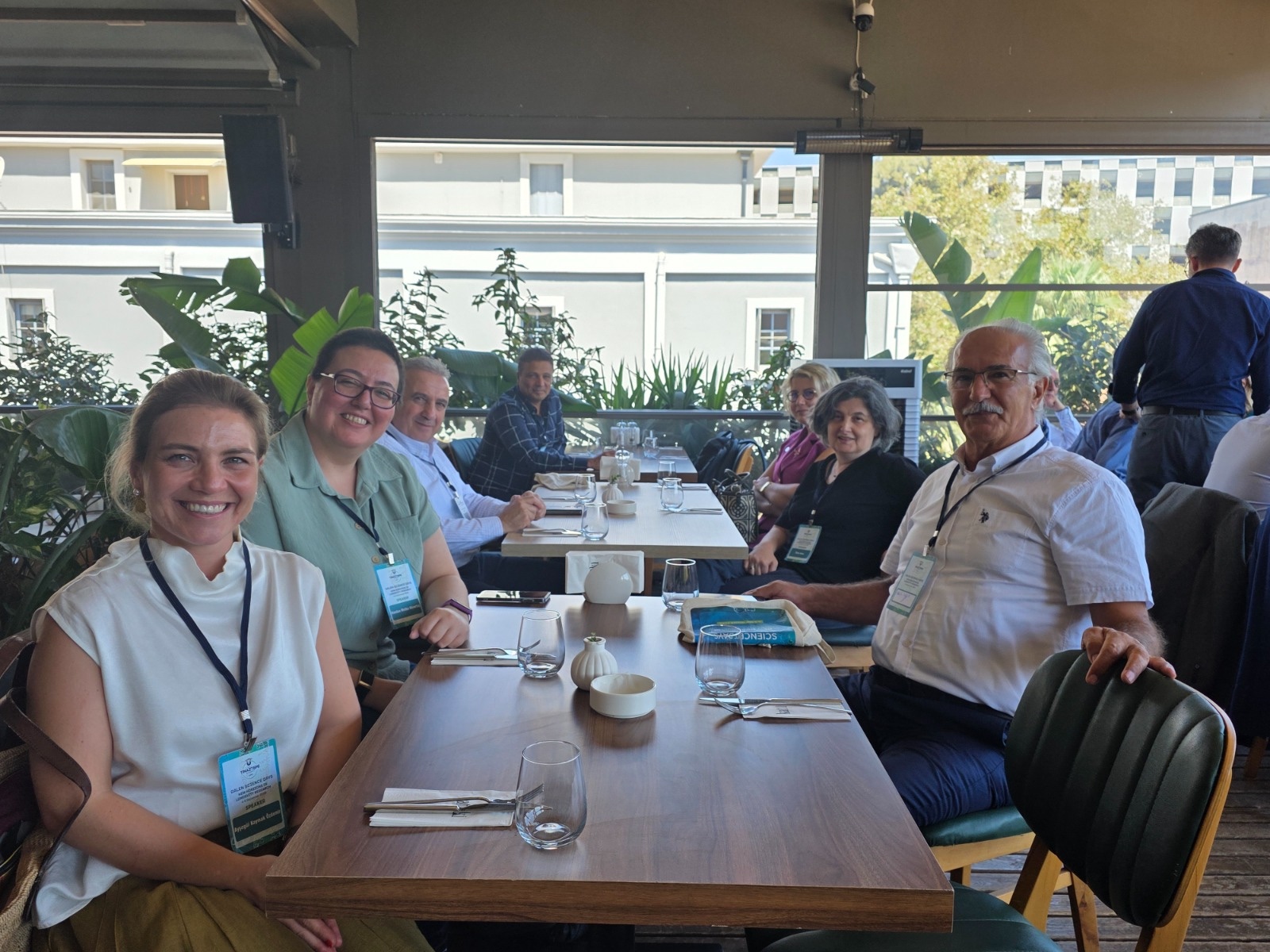
Seyfullah joined the group this summer as an undergraduate intern, and this was his first symposium in the ageing field. Clinicians, biochemists and nutrition scientists asked the same questions about ageing from very different starting points, and he heard all of them in two days.
Fahri Saatçıoğlu opened the symposium with a keynote on longevity through wellness. The sessions that followed covered experimental models and molecular mechanisms, cellular mechanisms of healthy ageing, clinical case studies in genomic medicine, telomeres, and nutrition and lifestyle. A panel on public health policy for healthy ageing in Türkiye closed the second day, and poster sessions ran in every break.
A meeting that puts clinicians, nutrition scientists and basic researchers in one room also brings the fundamentals back into view. Melike wrote some of them down on LinkedIn afterwards. Ageing is not programmed in the sense of pruning old individuals. The relationship between ageing, longevity and disease is more complex than it looks: if you get rid of one disease, the next one comes. So the group studies the mechanisms that bring worsening health with age, not one disease at a time. The evolutionary side of that argument is in our recent review on the evolutionary genetics of ageing.
Our thanks to the organising committee for the invitation and for two well-hosted days in İzmir.