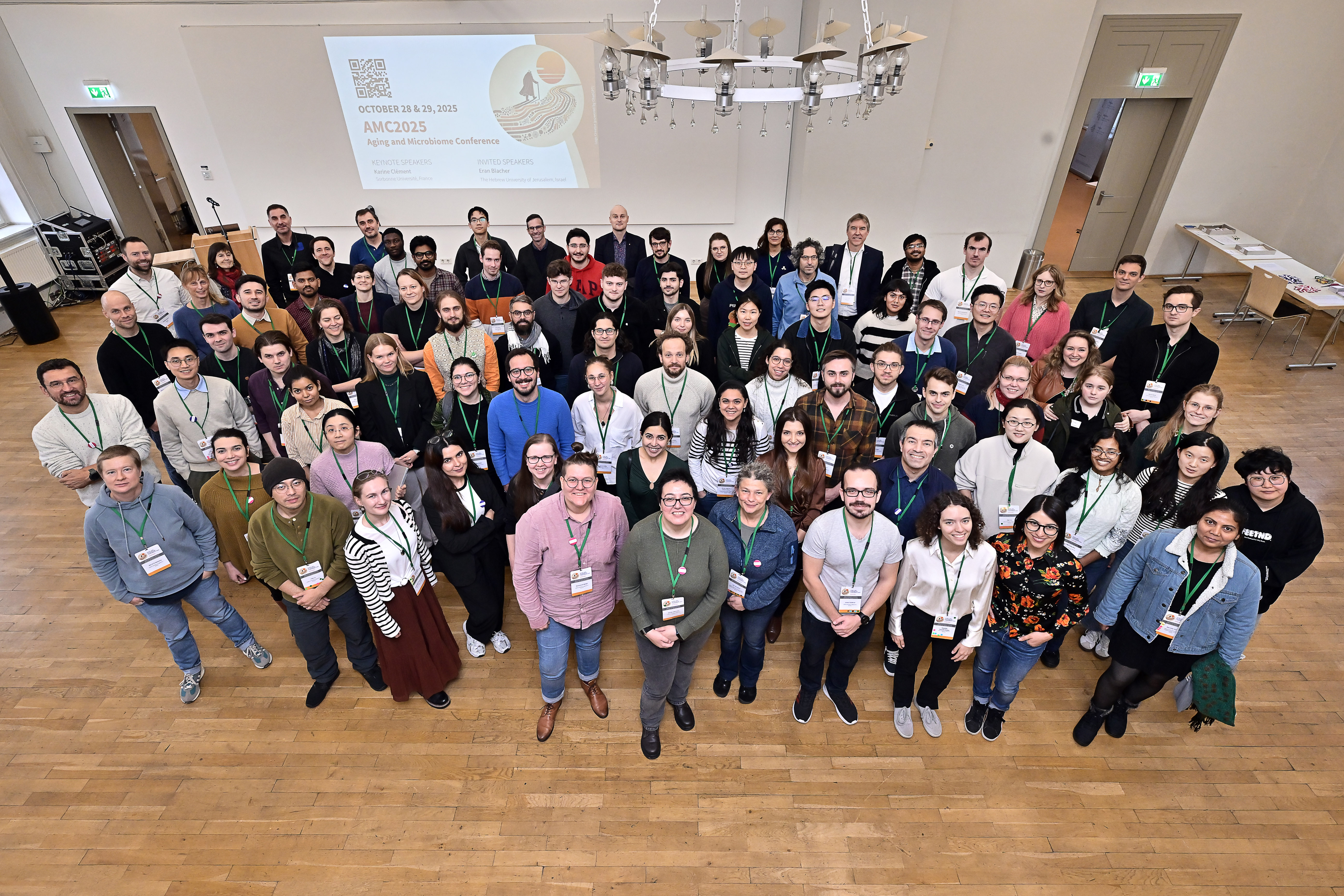
On 28–29 October 2025 we hosted the third Aging and Microbiome Conference (AMC2025) at FLI — co-organised by Clara Correia-Melo, Dario Valenzano, Melike Dönertaş, and Katarzyna Winek.
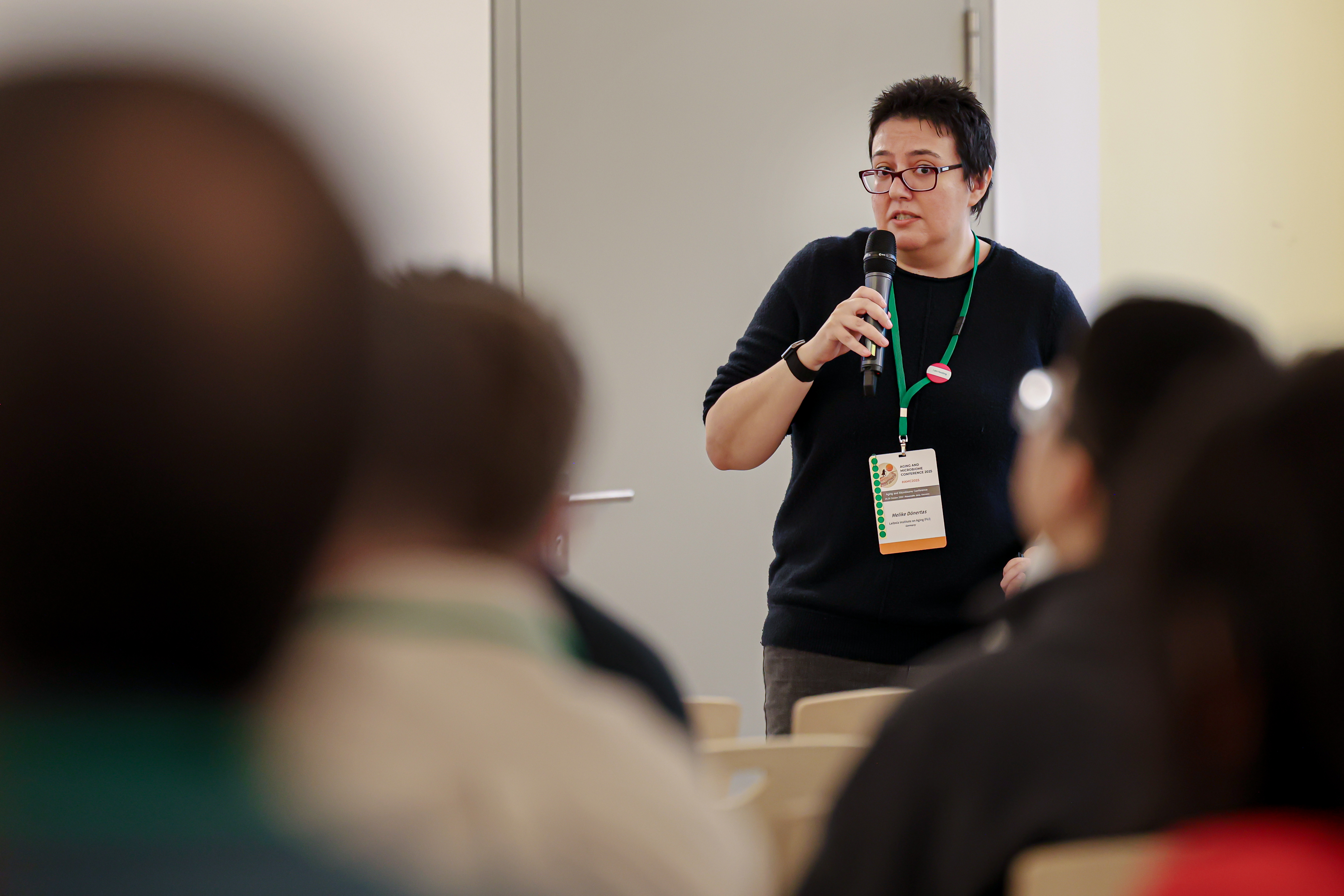
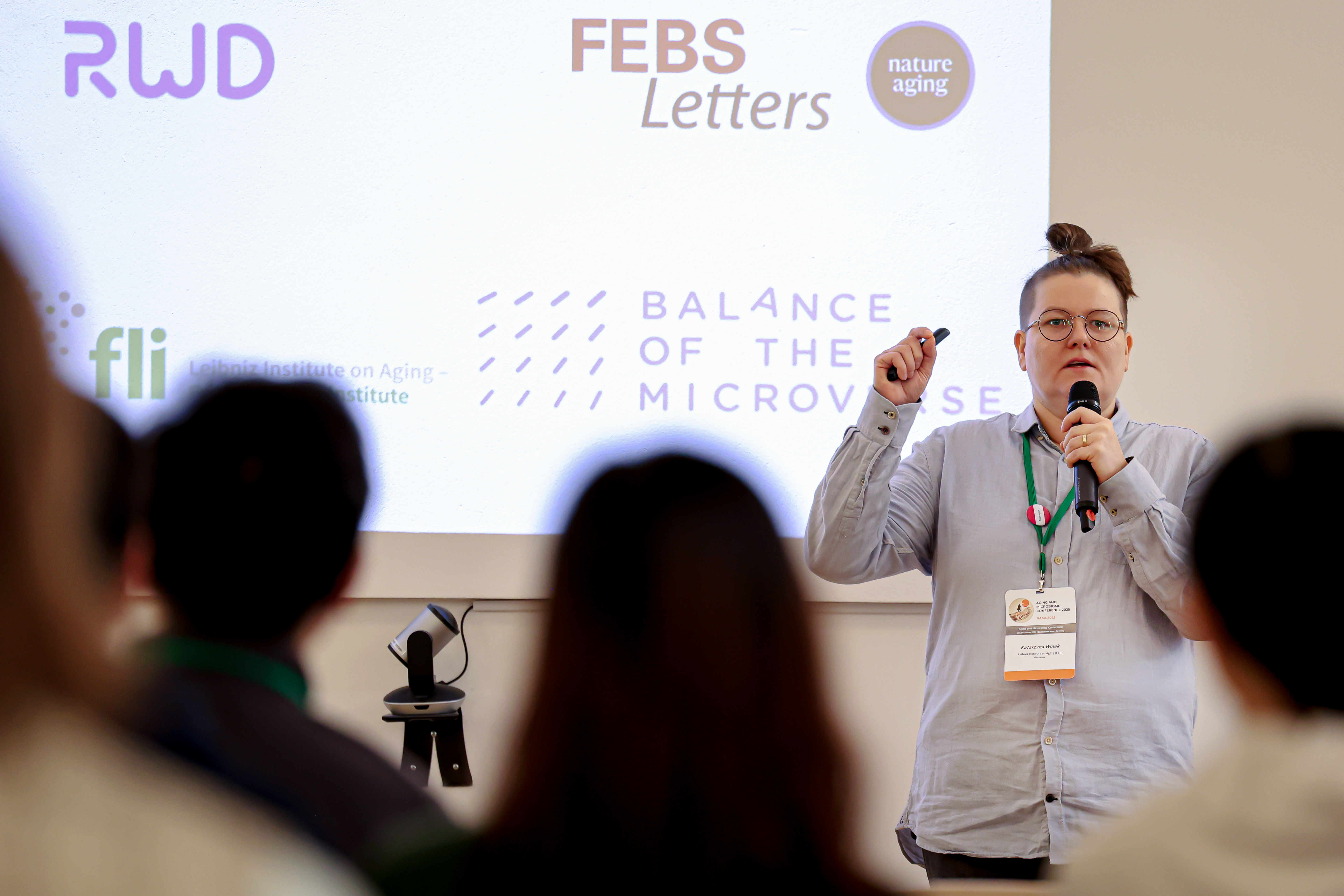
Two days, two themes, four keynotes, a packed programme of submitted talks, poster sessions, a panel debate with live audience polling, and (because gamification really does work) sponsor bingo running through it all.
Thanks to everyone who joined, presented, debated, and stayed late. AMC2027 is on the horizon — see you there.
Day 1 — across populations and metabolism
Niranjan Nagarajan opened with insights into aging-associated gut microbial changes from Asian octogenarian cohorts. Karine Clément followed with work from the EU MetaCardis project, connecting microbiome, nutrition, and cardiometabolic disease.
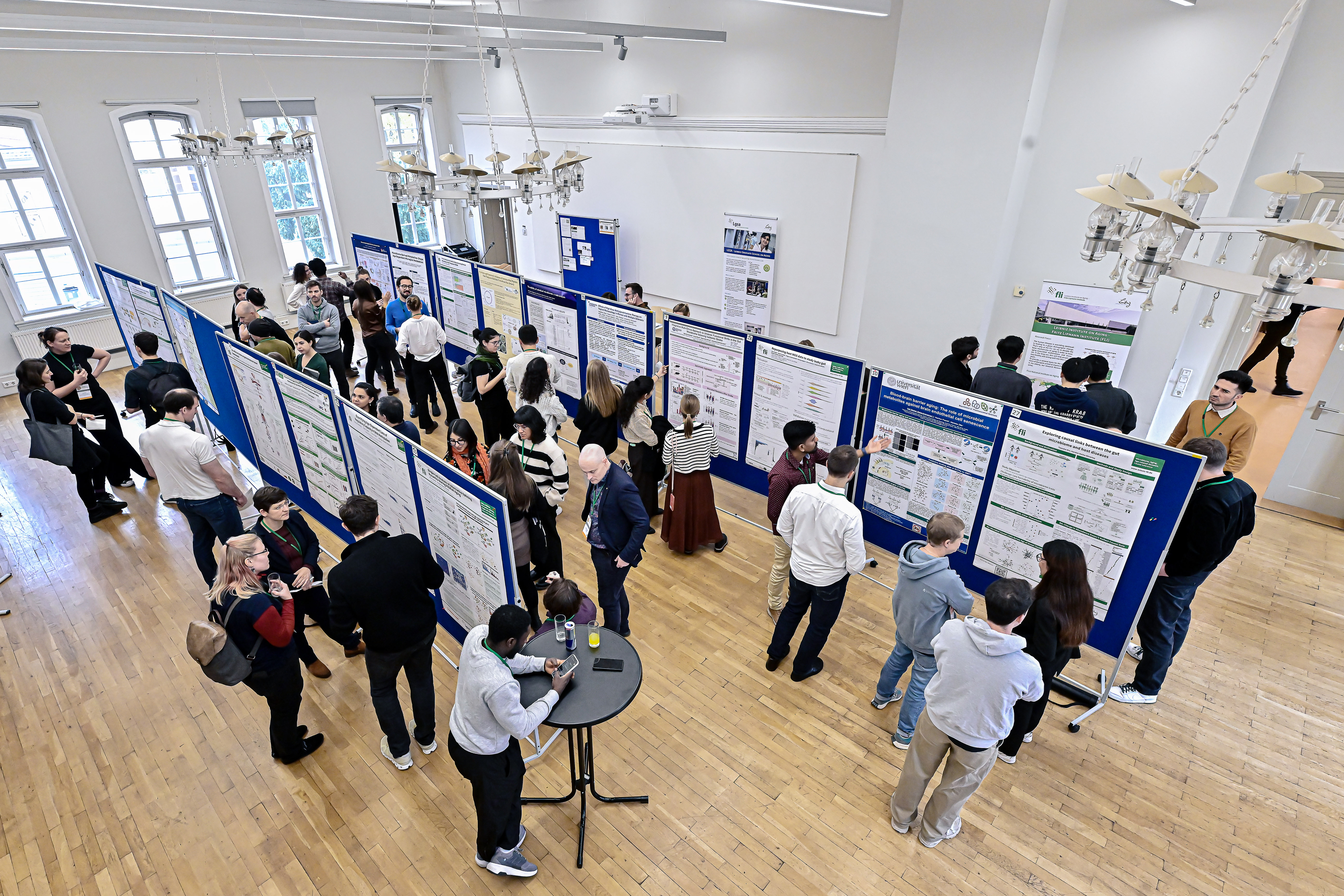
The two scientific sessions covered remarkable breadth — metabolic modelling of aging mice, life-history connections in microbiome profiles, germ-free mice aging patterns, Alzheimer’s-related microbiome research, turquoise killifish studies, and prebiotic effects on brain function. Plenty of poster-session and coffee-break conversation, plus a Meet-the-Expert session with Karine Clément.
Day 2 — across ages and the gut–brain axis
The morning’s Microbiome across ages session covered anti-Gal antibodies and inflammation, metabolic modelling of gut-microbiome-derived metabolites, the three-body problem of host–microbiome–diet interactions, and gut microbiota alterations in bone marrow dysfunction and myeloma. Gianni Panagiotou’s keynote on nutrient-driven modulation of holobiome function followed.
The afternoon’s Gut–brain axis session went deep — post-stroke inflammation, Eubacterium eligens in ischemic stroke, gut bacteria modulation of brain-resident immune cells, and short-chain fatty acids in hemorrhagic stroke. The lunch poster session was so engaging we felt guilty calling people back to the auditorium.
Panel discussion — with live audience polling
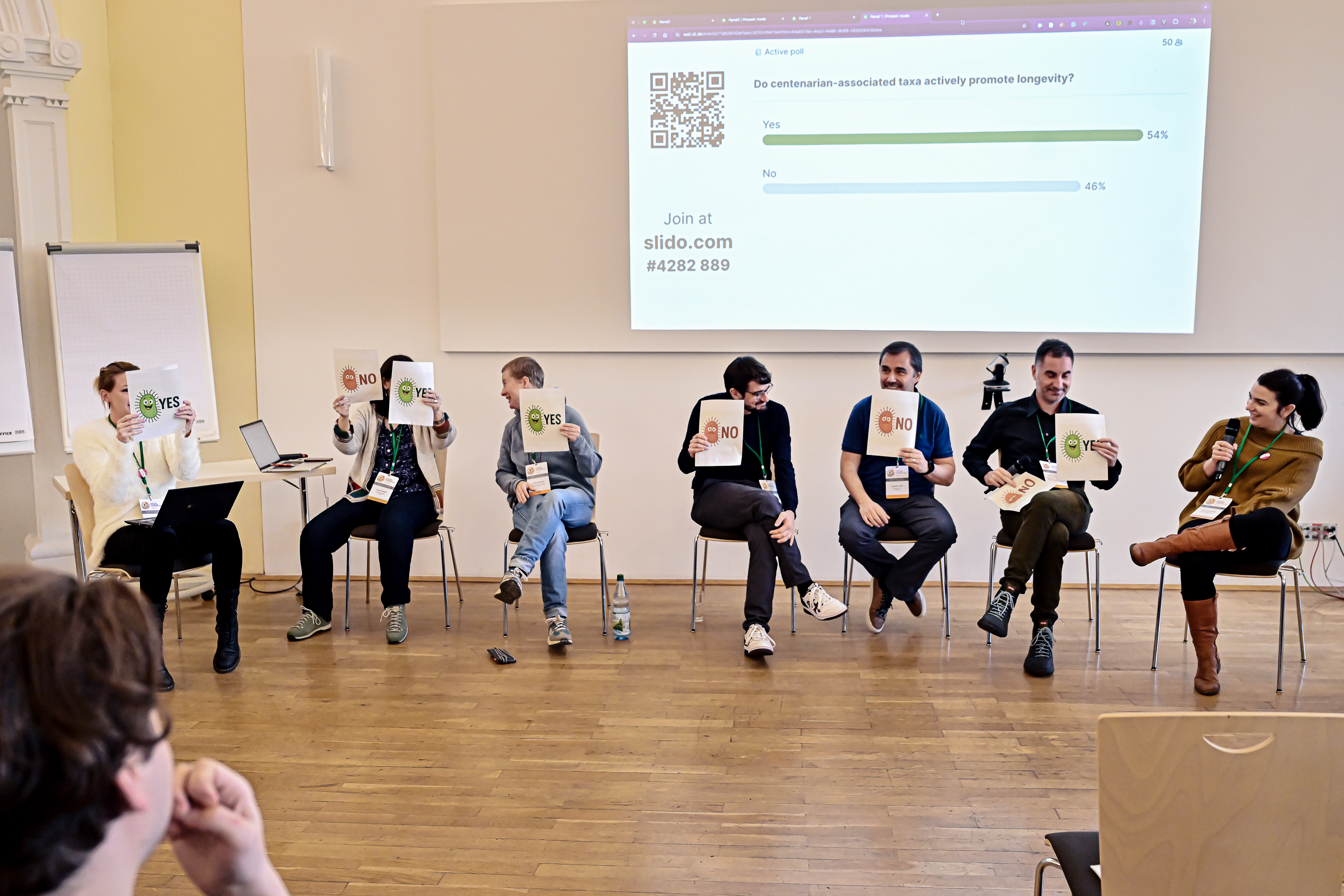
Clara Correia-Melo moderated a panel that put four real-time questions to the room. The audience splits and the resulting debates were a highlight of the conference:
- “Do centenarian-associated taxa actively promote longevity?” Audience 55–45 (yes–no). One panellist reframed it: rather than asking what separates centenarians, perhaps we should ask what youth-like aspects centenarians retain — and how to restore those functions in others.
- “Is there meaningful microbial translocation with age-related leaky gut?” Audience 75% yes, panel majority leaning no — with nuance about microbial-component vs. whole-microbe translocation, the lack of standardised measures (especially in humans), and whether “meaningful” translocation actually occurs. Low-grade inflammation may still play a role; definitive evidence isn’t there yet.
- “Is metabolism the primary route by which the microbiome influences aging?” Audience 60% no, 40% yes — much of the disagreement turned on what counts as “metabolism.” Microbial products acting on the host immune system are themselves results of microbial metabolism. Conclusion: very important route, lots still to discover.
- “Do microbial amyloids (e.g. curli) seed or exacerbate neurodegenerative pathology?” Audience near-split, 52–48 (no–yes). Distinction surfaced: microbial amyloids might not seed but could exacerbate neurodegeneration. More causal studies needed.